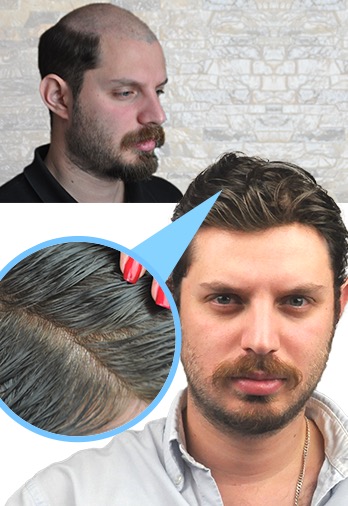


Androgenetic Alopecia and Hair Loss
Androgenetic alopecia — male pattern hair loss — is not just a physical change; it can affect your self-confidence, your social life and your daily activities . Seeing your hair thin in the mirror can often have a greater psychological effect than expected, and that is entirely natural.
So, is it possible to manage this process and ease the effects of hair loss? Yes. Thanks to modern medical methods and hair system solutions , you can both preserve a natural appearance and support your self-confidence.
In this guide you will discover the causes and stages of androgenetic alopecia and the ways to cope with hair loss . Our aim is not only to inform you but also to encourage you and support you with the right solutions.
What Is Androgenetic Alopecia?
Androgenetic alopecia is commonly known as male pattern hair loss and stems from genetic and hormonal factors. Frequently studied in the medical literature, this condition develops because of the sensitivity of the hair follicles to the male hormone.
- Genetic predisposition: Family history is one of the most decisive factors in hair loss.
- The role of the DHT hormone: Dihydrotestosterone (DHT) shrinks the hair follicles and accelerates hair loss.
- Typical areas of loss: The hairline and the crown are the areas where male pattern hair loss is seen most often.
Androgenetic alopecia can lead over time to reduced hair density and marked changes in the hairline. Noticing it early allows treatment and care options to be applied effectively.
The Symptoms of Male Pattern Hair Loss
Androgenetic alopecia usually appears at first with symptoms that are easy to notice. By assessing yourself at an early stage you can gauge the level of hair loss.
- A receding hairline: The front hairline visibly moving back.
- Reduced hair density at the crown: Thinning and bare patches forming at the top of the head.
- Thinning strands: A reduction in the thickness of the existing hair and general weakening.
- Gradual thinning and the forming of gaps: Visible gaps appearing over time at the crown and the hairline.
These symptoms matter for understanding how hair loss is progressing. When noticed early, your appearance can be supported with medical solutions or natural-looking methods such as a hair system.
The Causes of Male Pattern Baldness
Male pattern hair loss — androgenetic alopecia — is not down to a single factor. Genetic, hormonal and lifestyle elements come together to trigger the onset of hair loss. Here are the most important causes:
- Hormonal factors (the effect of DHT): Dihydrotestosterone (DHT) shrinks the hair follicles and accelerates hair loss.
- Genetic predisposition: A family history of male pattern hair loss is the clearest indicator of risk.
- Lifestyle: Poor nutrition, irregular sleep and certain habits affect hair health adversely.
- Stress and psychological factors: Chronic stress can disturb hormonal balance and the healthy functioning of the hair follicles.
Knowing these causes is critically important for preventing hair loss and applying the right care methods. Androgenetic alopecia noticed early can be managed with medical treatment or solutions such as a hair system.
The Process and Stages of Androgenetic Alopecia (The Norwood Scale)
Male pattern hair loss is classified from 1 to 7 on the Norwood scale. These stages show the severity and location of hair loss and are critically important for both diagnosis and treatment planning.
- Stage 1: Minimal change in the hairline; the loss is almost unnoticeable.
- Stage 2: Slight recession at the hairline; the crown is preserved.
- Stage 3: Marked recession of the hairline and the start of thinning at the crown.
- Stage 3 Vertex: Marked thinning at the crown; the hairline as in normal stage 3.
- Stage 4: The hairline and crown thin markedly; a thick band of hair remains between them.
- Stage 5: The hairline and crown areas almost merge and the band of hair thins.
- Stage 6: The hairline and crown areas merge; very little hair remains at the front.
- Stage 7: The most advanced level; only fine hair remains at the sides and the back.
Knowing the Norwood scale lets you track the speed of hair loss and apply suitable hair system or medical treatment options in good time.
Treatment and Management Methods for Androgenetic Alopecia
Various treatment and management options are available for male pattern hair loss. Understanding which method suits you is critically important for protecting your hair health and improving your appearance.
- Medical Treatment: Minoxidil and finasteride and similar medications strengthen the hair follicles and slow hair loss. They should be used on a doctor’s advice.
- Non-Medical Approaches: A balanced diet, stress management and hair care products support hair health and can reduce the effects of hair loss.
- Non-Surgical Solutions: Hair systems and wigspreserve an attractive appearance and support self-confidence, especially during periods of heavy hair loss.
The right treatment plan is determined individually according to the severity of the hair loss, genetic factors and lifestyle. Professional advice and regular follow-up are important for an effective result.
An Effective, Comfortable Solution with a Hair System
During radiotherapy or periods of heavy hair loss, hair system offers a natural, safe and non-surgical solution. It lets you carry on with your daily life uninterrupted and preserves your self-confidence.
- Natural look: With a custom mould and hairline it creates the feel of real hair.
- Support for Confidence: It keeps your morale high during hair loss and supports your social life.
- Ease of Wear: Thanks to its breathable, light and comfortable structure it provides ease in daily life.
- A Non-Surgical Solution: It offers an attractive appearance without affecting the hair follicles; it can be worn safely during treatment.
- Flexible Planning: When hair grows back, the hair system can be adapted again to suit you.
Remember: during radiotherapy or hair loss, carry on with your daily life uninterrupted and preserve your self-confidence. The NeoHair expert team is beside you for both your appearance and your psychological support.
Frequently Asked Questions
Is male pattern hair loss genetic?
Yes, androgenetic alopecia is largely related to genetic predisposition. Family history is the most important factor determining the risk of hair loss.
What effect does the DHT hormone have on hair loss?
Dihydrotestosterone (DHT) shrinks the hair follicles and accelerates hair loss. It is one of the main hormonal causes of male pattern hair loss.
Where does hair loss begin?
The hairline and the crown (vertex) are generally the areas where hair loss begins. The thinning widens and becomes more evident over time.
Is a hair system suitable for male pattern baldness?
Yes, a hair system provides a natural appearance and support for self-confidence without requiring surgery. It is ideal for thinned or completely bald areas.
How is a hair system fitted?
It is fitted using personalised measurements and a mould. Thanks to special adhesives it offers a natural appearance and comfortable wear. It can be worn comfortably in daily life.
How long can a hair system be worn?
Depending on its care, a hair system can be worn for a long time. The adhesives and the strands should be checked regularly.
How is a hair system cared for?
It should be cleaned with a gentle shampoo and suitable care products, the adhesives should be checked regularly and professional support should be sought when needed.
Can a hair system be worn after a hair transplant?
Yes, a hair system can be worn as a temporary solution, particularly during the recovery period after a hair transplant. An attractive appearance is preserved in this way.
Are short hair system models suitable?
Short hair system models offer a comfortable, natural solution for male pattern hair loss with their light, breathable structure.
Related Posts
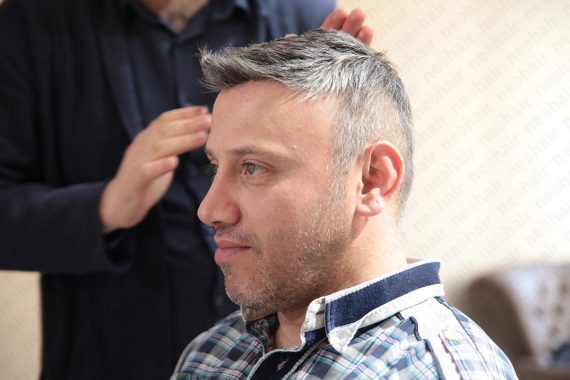
The Stages of Making a Hair System
Hair transplant Hair systems, chosen more often than that method and used more and more, bring the question “What is this hair system method?” to mind. First of…
Read More
In Which Cases Is a Hair System Applied
Hair loss has been one of men’s main problems from the past to the present. Although it is seen in men, it is seen just as often in…
Read More
Hair System Models
Having natural-looking hair again after hair loss is possible with hair system models . How? What matters for this is that the hair is always styled naturally. At…
Read More