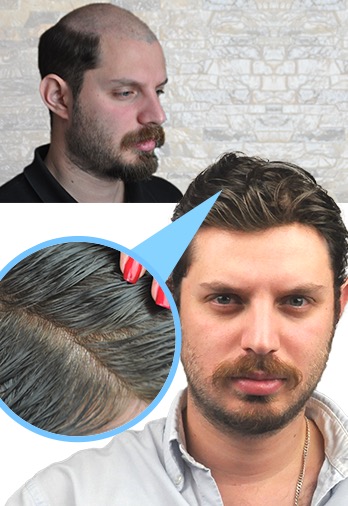


Alopecia Areata Hair Loss
Alopecia areata is a type of hair loss that arises when the immune system attacks the hair follicles, generally causing hair loss in round patches. For many people this is not just a physical change but a process that affects confidence and psychological health.
So is it possible to get through it without feeling alone, keeping your appearance and your confidence? And until your hair grows back, can you carry on with daily life with natural, comfortable, safe solutions ?
Modern hair system systems have made it far easier, during alopecia areata, to keep your natural appearance, support your confidence and stay psychologically strong . In this guide you will find the causes of alopecia areata, how the hair loss works, and the effective solutions a hair system provides.
What Is Alopecia Areata?
Alopecia areata is a condition in which the immune system mistakenly attacks the hair follicles, showing itself as hair loss in generally round or oval patches. It can occur in adults and children alike, and often stands out for its sudden-onset hair loss . While it affects physical appearance, it can also have a significant impact on psychological and social life.
- Definition: Alopecia areata is an immune-system condition characterised by generally round patches of hair loss.
- Common areas: The scalp, eyebrows, eyelashes, beard and sometimes body hair.
- Frequency and age group: It can occur at any age, most often between 20 and 40.
- Onset: Hair loss generally starts suddenly and can appear in one or several areas.
- Temporary or recurring: In some people the hair grows back; in others the loss can recur.
Alopecia areata is not just a change in physical appearance; it can also affect confidence and social life. With prompt diagnosis and the right approach, treatment options can be weighed up and quality of life protected with temporary solutions during the hair loss.
Types of Alopecia Areata and How Widespread It Is
Alopecia areata can be limited to a single area or spread more widely. Its types and extent matter for understanding both the treatment approach and the course of the condition. With prompt diagnosis and proper assessment, the right methods can be determined.
- Patchy Alopecia Areata: Limited to small, round patches of hair loss, generally in one or a few areas.
- Diffuse Alopecia Areata: Hair loss appears in several areas and can affect large parts of the scalp.
- Totalis: Hair loss occurs across the whole scalp. The follicles are entirely affected.
- Universalis: Characterised by the loss of all body hair; eyebrows, eyelashes and body hair are affected too.
“Alopecia areata can stay limited to one area, or it can affect the whole scalp (totalis) or all body hair (universalis).” Knowing the type and extent matters both for treatment planning and for protecting confidence with temporary solutions. Hair systems and other cosmetic support can improve quality of life, especially in widespread, totalis and universalis cases.
How Does Alopecia Areata Occur?
Alopecia areata develops as a result of the immune system’s response against the hair follicles. Normally hair follicles pass through the different phases of the hair cycle, allowing the hair to grow. But the immune system can suddenly affect that cycle and cause rapid hair loss. The mechanism combines genetic predisposition with environmental triggers, sending the follicle temporarily into a “sleep” phase.
- The Immune System and T Cells: T cells mistakenly attack the follicle and halt its anagen phase.
- Interrupted Anagen Phase and Follicle Dormancy: The hair’s growth phase is cut short abruptly; the follicle goes temporarily into resting mode.
- Stress and Genetic Predisposition: High stress levels and a family history of alopecia increase the risk.
This mechanism explains why hair loss starts suddenly and in patches. Immune cells attack the follicle, halt the anagen phase and cause rapid loss. In most cases the follicles are not damaged, so with the right treatment and support the hair can grow back. In widespread or totalis types especially, temporary hair system solutions provide both aesthetic and psychological relief.
Risk Factors: Who Gets Alopecia Areata More Often?
Alopecia areata is more common in people with certain risk factors. A sensitive immune system, genetic predisposition and environmental triggers can all increase the attack on the hair follicles. This plays an effective role in the sudden onset of hair loss.
- A Family History of Autoimmune Disease: The risk rises if there is alopecia areata or another autoimmune condition in the family.
- A Stressful Life and Trauma: Intense psychological stress or traumatic experiences can be a trigger.
- Vitamin Deficiencies: Vitamin D and iron deficiencies in particular affect hair health negatively.
- Thyroid or Other Autoimmune Conditions: Conditions such as Hashimoto’s thyroiditis and lupus raise the risk of alopecia areata.
People with an autoimmune history, living with intense stress or with a vitamin deficiency are more prone to alopecia areata. So if you are in a risk group, hair loss can be managed with early diagnosis and the right support. Modern hair system solutions help protect confidence by providing aesthetic and psychological support to those at risk.
Symptoms and Diagnosis
Alopecia areata usually shows itself with symptoms that are easy to notice. Rapid hair loss and round bald patches in particular areas are among the clearest signs. Loss spreading to areas such as the eyebrows, eyelashes and beard can also be observed.
- Rapid Loss and Round Bald Patches: Suddenly starting hair loss and small round bald spots are the most typical finding.
- Loss in the Eyebrows, Eyelashes or Beard: Alopecia areata may not be limited to the scalp; it also affects facial hair.
- Nail Changes: Pitting, white spots or ridges can appear on the nails.
Alopecia areata shows itself with round bald patches, rapid loss and nail changes. When you notice these signs it is important to see a dermatologist for early diagnosis. In cases of sudden total hair loss or itchy, reddened skin, see a dermatologist immediately and put together the right treatment plan. Early intervention is critical for protecting the follicles and preventing progression.
Diagnosing Alopecia Areata: Which Tests Are Done?
Diagnosis generally starts with a detailed assessment by a dermatologist. When rapid hair loss and round bald patches are seen, several tests are used for an accurate diagnosis. The aim is to determine whether the hair loss is autoimmune in origin and, where necessary, to support that with further investigation.
- Physical Examination and Dermoscopy: The scalp is examined, and the state of the follicles and the pattern of loss are assessed.
- Blood Tests: TSH, anti-TPO, vitamin D, iron and B12 levels are checked to investigate autoimmune or nutritional risks.
- Skin Biopsy: If needed, a small tissue sample from the scalp confirms the diagnosis and determines the severity.
Dermoscopy and blood tests confirm alopecia areata; where necessary, dermatology and endocrinology specialists work together on a comprehensive assessment. Early diagnosis lets the treatment plan start quickly and effectively. These tests also matter for detecting the risk of other autoimmune conditions.
Treatment Options (Medical and Non-Medical)
Treating alopecia areata involves different methods according to the severity, the extent and individual needs. Medical and non-medical approaches are applied together, aiming to stop the hair loss, support new growth and protect the patient’s confidence.
Corticosteroids and Immunomodulators
Applied to the hair follicles, corticosteroids reduce the immune system’s attack and can stop the loss. They can be applied as a topical cream or lotion, or by direct injection. Immunomodulators also support regrowth by balancing the immune system.
Corticosteroids can stop the loss by protecting the follicles; medical supervision is essential because of side effects.
Topical Treatments
Minoxidil, PRP (platelet-rich plasma) and other topical support slow the loss and encourage regrowth. Regular use and dermatologist approval improve their effectiveness.
Minoxidil slows hair loss and supports regrowth; it should be used with dermatologist approval.
Nutrition and Supplements
Making up deficiencies in vitamins and minerals such as vitamin D, B12, iron, zinc and biotin supports the hair cycle. Deficiencies are identified with blood tests, and the dose is set on a dermatologist’s advice.
When deficiencies are made up the hair cycle is supported; the dose should be set on a dermatologist’s advice.
Lifestyle & Stress Management
Stress can worsen alopecia areata. Yoga, meditation, regular sleep and light exercise balance the immune system, improve the effectiveness of treatment and help keep the follicles healthy.
Managing stress helps keep the follicles healthy and improves the effectiveness of treatment.
Non-Surgical Cosmetic Solutions (Hair Systems)
Hair systems, wigs and hair fibres protect your natural look and your confidence during the hair loss caused by alopecia areata. Used alongside medical treatment they provide both aesthetic and psychological support.
A hair system provides a natural look and confidence throughout the hair loss; it can be used safely alongside medical treatment.
Do not use any medication or supplement without seeing a doctor; a hair system supports medical treatment and protects your confidence.
A Natural Look During Alopecia Areata With a Hair System
For people losing hair because of alopecia areata, hair systemis a non-surgical, temporary-to-medium-term solution. It lets you protect your confidence while waiting for the follicles to regrow, and makes daily life easier. Made specifically for you, these systems give a look close to real hair, with a natural hairline and a breathable structure.
- A Non-Surgical Solution: Painless, safe and quick to apply.
- Support for Confidence: It protects your appearance and lifts morale and motivation.
- Bespoke Design: The mould, the natural hairline and the texture are matched to you.
- Suited to Sensitive Skin: Special adhesives and materials are used for scalps affected by alopecia areata.
- Flexible Planning: When the follicles start to regrow, the system can be reworked.
Remember: you are not alone in this. NeoHair‘s expert team is with you, for how you look and how you feel. The most effective results come when medical treatment and a hair system are used together.
Frequently Asked Questions
Can a hair system be used for alopecia areata?
Yes, a hair system can be used safely during alopecia areata. It covers the areas of loss while protecting your appearance and lifting your confidence. Used in parallel with medical treatment it supports the process and makes daily life comfortable.
How long can a hair system be worn with alopecia areata?
A hair system can be worn comfortably throughout the period of heaviest loss. With good care and adhesive it gives three to six months of comfort. Once the follicles start to regrow, the plan can be updated and natural growth supported.
Does a hair system affect treatment for alopecia areata?
No, a hair system does not affect treatment directly. It can be used safely alongside medical and topical treatments. It covers the areas of loss while protecting appearance, lifting patients’ morale and making it easier for them to stick with treatment.
Is a short hair system suitable for alopecia areata?
Yes, a short hair system is light, breathable and natural-looking. It is easy to wear, especially over round patches of loss. It gives everyday comfort, does not irritate the skin, and protects your appearance without disrupting treatment.
How is a hair system cared for with alopecia areata?
A hair system should be cleaned with a gentle shampoo and suitable care products. The adhesives are checked regularly and the areas of loss kept clean and dry. Professional care extends the wearing time and provides safe aesthetic support alongside treatment.
Does a hair system boost confidence?
Yes. By covering the areas of loss a hair system protects your appearance and offers psychological relief. It gives moral support to people whose confidence has been knocked by alopecia areata, makes it easier to carry on with daily activities and helps them feel good in social settings.
Related Posts
In Which Cases Is a Hair System Applied
Hair loss has been one of men’s main problems from the past to the present. Although it is seen in men, it is seen just as often in…
Read More
The Stages of Making a Hair System
Hair transplant Hair systems, chosen more often than that method and used more and more, bring the question “What is this hair system method?” to mind. First of…
Read More
How Long Does a Nanotechnology Hair System Last?
The service life of nanotechnology hair systems varies according to the material used in making them, correct wear and the care carried out. The technology used in making…
Read More