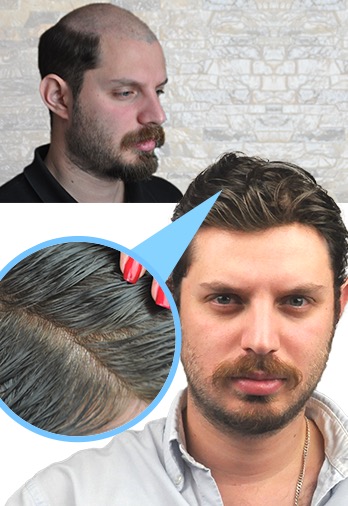


Thyroid Hormone Disorders and Hair Loss
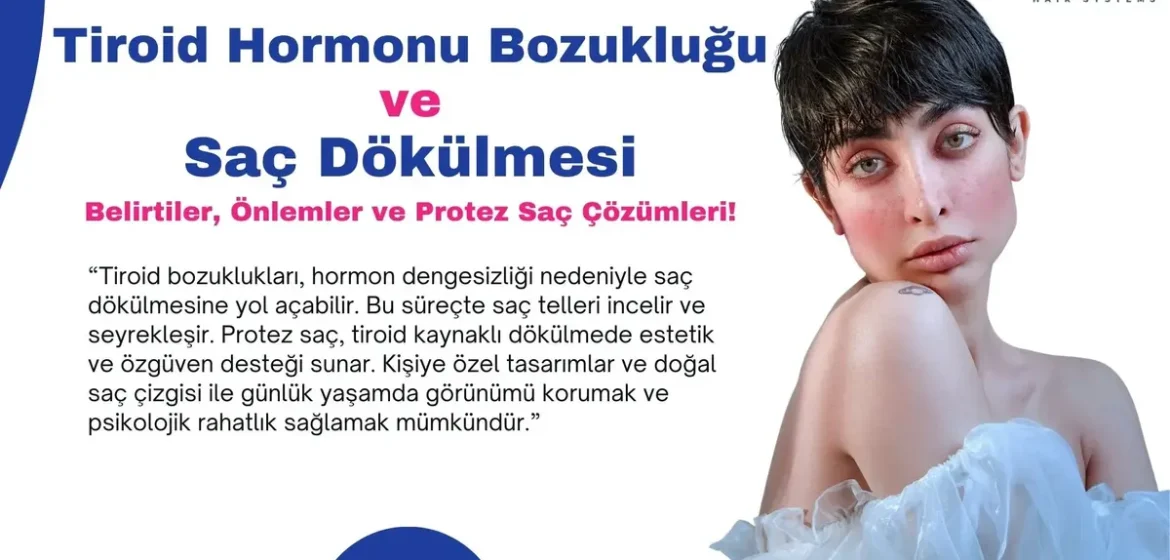
The thyroid regulates many of the body’s fundamental functions, from energy production to metabolism. But the smallest imbalance in the hormonesaffects not only our internal organs but the health of our hair directly. Thinning, weakening, shedding hair is not, for most people, just an aesthetic loss; it is also a process that wounds confidence and the sense of identity .
So are we helpless in the face of hair loss caused by thyroid disorders? Actually no. It is possible to balance your hormones with the right medical treatment, to strengthen your follicles again with nutritional and lifestyle support, and meanwhile to protect your appearance with natural-looking, safe solutions . Bespoke hair systems offer important support in protecting your confidence and quality of life even while treatment continues.
In this guide you will find how thyroid hormones affect the hair cycle, the role of disorders such as hypothyroidism and hyperthyroidism in hair health, the methods of diagnosis and treatment, and the practical solutions you can use to protect your hair density and appearance. Our aim is not just to inform you but to help you feel strong and manage the process more knowingly.
The Link Between Thyroid Hormones and Hair Loss
The thyroid is a small but vitally important gland at the front of the neck. By secreting the hormones T3 (triiodothyronine) and T4 (thyroxine) it regulates the rate of metabolism, energy production, body temperature and cell renewal. The secretion of those hormones is in turn controlled by TSH (thyroid-stimulating hormone) . Because hair follicles are made of rapidly renewing cells, they are
directly affected by thyroid imbalance.
- Hypothyroidism: As T3 and T4 levels fall, the follicles weaken and the hair thins and goes dull.
- Hyperthyroidism: An excess of hormones speeds up the hair cycle, which causes strands to shed early.
- Imbalance: Both a deficiency and an excess can cause hair loss.
An imbalance in thyroid hormones leads not only to hair loss but to clear changes in the hair’s quality, shine and rate of growth too. That is why a hidden thyroid disorder can sometimes lie behind hair loss. With early diagnosis and the right treatment the follicles can strengthen again and healthy hair growth can be supported.
Yes. Imbalances in thyroid hormones disrupt the hair cycle and can cause hair loss. Both hypothyroidism and hyperthyroidism play a part.
The Mechanism Between Thyroid Disorders and Hair Loss
Hair loss arises from disruptions in the life cycle of the hair follicle. Normally hair follows the anagen (growth), catagen (transition) and telogen (resting/shedding) phases in a regular cycle. Thyroid hormones are among the most critical factors controlling the speed and quality of that cycle. Hormonal imbalance causes both structural and functional disruption in the follicles, leading to different types of hair loss.
- Hypothyroidism: The hair cycle slows, the anagen phase shortens and the strands thin.
- Hyperthyroidism: The hair moves rapidly into the telogen phase, and widespread, sudden shedding occurs.
- Autoimmunity: Thyroid antibodies (Hashimoto’s, Graves’) can cause inflammation in the hair follicles.
Hypothyroidism slows the hair cycle; hyperthyroidism speeds up the move into telogen, leading to widespread shedding.
🔹 The Effects of Hypothyroidism
A fall in T3/T4 hormones causes a metabolic slowdown in the follicles. The hair then stays in the anagen phase for a shorter time, the rate of growth drops, and the strands become thinner, more brittle and duller. Over the long term, widespread thinning and loss of eyebrows and eyelashes can also occur.
🔹 The Effects of Hyperthyroidism
An excess of hormones over-stimulates the follicles. The hair moves into the telogen phase faster than normal (telogen effluvium), which causes sudden, widespread loss. The strands become thinner and weaker, and you may see a lot of hair in your hand after brushing.
🔹 The Role of Thyroid Antibodies
The autoimmune process in Hashimoto’s thyroiditis or Graves’ disease does not just disrupt hormone balance; the immune system’s antibodies can also cause inflammation in the hair follicles. That contributes to the follicles shrinking (follicular miniaturisation) and to the shedding speeding up.
In short, thyroid disorders trigger hair loss both through hormonal imbalance and through the immune system. Left untreated the shedding can progress; but with the right medical treatment the hair cycle can come back into balance.
Who Gets It More Often? (Risk Factors)
Hair loss linked to thyroid disorders can occur at any age; but some groups are more sensitive to the risk. Both genetic predisposition and periods of hormonal change disrupt thyroid balance and affect the follicles directly. Here are the most common risk factors:
- Women: The risk rises especially during the hormonal fluctuations of menopause and after childbirth.
- Family History: The likelihood is higher in people with thyroid disease in the family.
- Autoimmune Conditions: Hair loss can be more marked in those with a history of Hashimoto’s or Graves’.
- The Post-Pregnancy Period: Hormonal ups and downs speed the hair’s move into the telogen phase.
- A History of Radiotherapy: Treatments applied to the neck area can weaken thyroid function.
- Older Age: A natural slowing of thyroid function can set the stage for hair loss.
Those with thyroid disease in the family, autoimmunity, or in menopause or the post-pregnancy period are more prone to hair loss.
Having these risk factors does not mean you will definitely experience hair loss; but it does mean you should pay closer attention to the signs. With early diagnosis and the right support it is possible to protect the health of your hair.
Symptoms & How to Spot Them
Hair loss linked to thyroid disorders generally progresses slowly, but in some cases sudden, widespread loss can occur. Noticing these signs plays a critical part in early diagnosis, both for hair health and for overall metabolic balance. The checklist below may help you assess your own situation:
- Marked thinning and dullness in the strands
- Gradual thinning (especially at the crown and hairline)
- Daily Noticing more than 100 strands shedding
- Thinning or gaps in the eyebrows and eyelashes
- Hair loss together with brittle nails and dry skin
- Shedding accompanying hormonal fluctuations (menopause, after childbirth)
Widespread thinning across the whole head, excessive breakage and more than 100 strands a day may be thyroid-related.
These signs are clues not just about your hair but about your thyroid function too. Spotting them early raises your chances both of stopping the hair loss and of treating the underlying hormonal problem.
Diagnosis: Which Tests Are Done?
When thyroid-related hair loss is suspected, blood tests and a clinical examination are assessed together for an accurate diagnosis.
The diagnostic process not only explains the hair loss but also reveals the degree of the underlying thyroid problem.
🔎 A Thyroid Test Guide in 3 Steps
- TSH Measurement: The first step is to assess thyroid activity. A high TSH suggests hypothyroidism, a low TSH hyperthyroidism.
- Free T4 and Free T3: The free forms of the thyroid hormones are examined to see whether there is an imbalance.
- Antibody Tests (anti-TPO, anti-TG): Used to identify autoimmune causes such as Hashimoto’s or Graves’.
The first step is a TSH measurement; if it is abnormal, free T4/T3 and antibodies are requested — the results determine the treatment plan.
These tests are generally requested by a dermatologist , but if the results point to a thyroid imbalance the patient is always referred to an endocrinologist .
Further assessment is essential especially if systemic signs such as fatigue, weight change, dry skin or palpitations accompany the hair loss.
Treatment Options for Thyroid-Related Hair Loss
An imbalance in thyroid hormones can disrupt the hair cycle and cause widespread hair loss. The good news is that this shedding is usually treatable and reversible. Below you will find both medical and supportive options, plus temporary aesthetic solutions.
- A. Correcting the Thyroid: In hypothyroidism, levothyroxine; in hyperthyroidism, antithyroid drugs or radioactive iodine treatment can be used. “Once thyroid balance is achieved, hair loss slows in most patients and recovery begins within three to six months.”
- B. Topical Treatments: Minoxidil solutions, PRP (platelet-rich plasma) and some topical supports stimulate the follicles. “Minoxidil stimulates the follicles while the thyroid is being balanced; it should be used with a doctor’s approval.”
- C. Nutrition & Supplements: Deficiencies in iron, vitamin D, B12, zinc and biotin can worsen hair loss. These levels need to be monitored regularly by a doctor.
Note: Rather than taking supplements at random, planning should be based on your own laboratory results. - D. Lifestyle & Stress Management: Enough sleep, regular exercise, meditation and stress control all affect hormone balance positively and reduce hair loss.
- E. Non-Surgical Cosmetic Solutions: When hair loss becomes heavy and visible, hair system, a wig or hair fibres provide temporary aesthetic support. “A hair system gives a natural look and confidence until the hair comes back; it can be used safely alongside medical treatment.”
Hair loss during thyroid treatment can take time, but with the right combinations successful results are possible both medically and aesthetically.
A Hair System as the Answer to Thyroid-Related Hair Loss
Imbalances in thyroid hormones affect the hair cycle and can lead to widespread hair loss . That affects both appearance and confidence negatively. While treatment continues, hair systemoffers a non-surgical, safe and temporary solution. Until your hair grows strong again it helps you keep your natural look .
- Natural look: A bespoke design achieves the look of real hair.
- Comfortable to Wear: Its breathable structure keeps you comfortable all day.
- Support for Confidence: It contributes psychological and social support throughout thyroid treatment.
- Medical Safety: Special materials that do not harm sensitive scalps are used.
- Flexible Planning: When your hair grows back, the system can easily be adapted.
Remember: you do not have to lose your hair while thyroid treatment continues. The NeoHair team is with you, for a natural look and psychological support.
Frequently Asked Questions
Does a thyroid disorder cause hair loss?
Yes, both hypothyroidism and hyperthyroidism can affect the follicles and lead to widespread shedding. With treatment the hair generally grows back.
Does thyroid treatment bring the hair back?
Once thyroid balance is achieved, hair loss slows and the hair can start growing back within three to six months. A hair system can be used as an interim solution.
Is a hair system safe for thyroid patients?
Yes, a hair system can be used safely in thyroid-related hair loss. It provides aesthetic and psychological support throughout ongoing treatment.
Does a hair system affect a thyroid patient’s daily life?
A hair system protects your appearance, supports social life and confidence, and helps you get through treatment more comfortably.
Do thyroid medicines stop hair loss?
At the right dose, thyroid medicines return the hair cycle to normal and the shedding slows. But a hair system can be used until the hair comes back fully.
Can hair loss be hidden with a hair system?
Yes, with its natural look and bespoke structure a hair system effectively covers thyroid-related shedding and boosts confidence.
What should thyroid patients watch for when wearing a hair system?
Materials suited to a sensitive scalp should be used, the adhesives checked regularly, and gentle products chosen for cleaning.
Is a short hair system suitable for thyroid patients?
A short hair system is a comfortable, natural solution for people with thyroid-related shedding, thanks to its light, breathable structure.
Is the hair system changed during treatment?
Yes, as the hair grows or the shedding intensifies the system can be re-adapted specifically for you.
How long can thyroid patients wear a hair system?
A hair system can be worn until the hair recovers fully. It can be used safely alongside medical treatment and provides aesthetic support.
Related Posts

In Which Cases Is a Hair System Applied
Hair loss has been one of men’s main problems from the past to the present. Although it is seen in men, it is seen just as often in…
Read More
The Stages of Making a Hair System
Hair transplant Hair systems, chosen more often than that method and used more and more, bring the question “What is this hair system method?” to mind. First of…
Read More
Hair System Models
Having natural-looking hair again after hair loss is possible with hair system models . How? What matters for this is that the hair is always styled naturally. At…
Read More