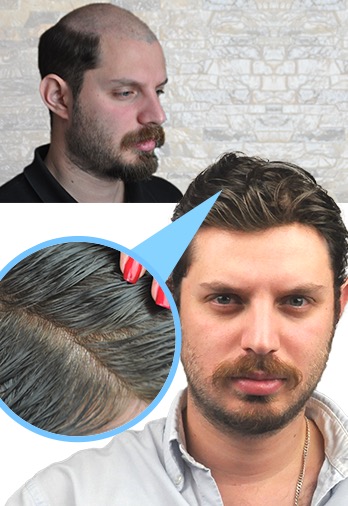


How Much Is a Hair System?
The emotional weight of losing your hair often runs much deeper than any question of price. But when you start looking for a solution, the first question is always the same: “How much does a hair system cost?” The answer has more layers than you might think, because a hair system is not an off-the-peg product but a completely bespoke hair solution.
The cost is not made up of visible figures alone; behind it, the quality of the hair used, the base technology, the expert craftsmanship and the aftercare support all set the price.
In this guide we examine the 7 critical factors that set the real cost of a hair system, how the quality of the hair type feeds into the price, the importance of the base structure, bespoke design details, the value of expert craftsmanship, and how care and warranty packages contribute to the cost in full detail. Armed with the right information, you can comfortably make the choice that best fits your budget and satisfies you in the long run.
Why Does the Cost of a Hair System Vary So Much?
The main reason hair system prices span such a wide range is that the product is entirely bespoke. Two people may want the same model, but because their hair type, pattern of loss and expectations differ, so does the cost. That is why a hair system price is never “one size fits all”. The technology used, the source of the raw material and the aftercare services also feed directly into the price.
Understanding these cost items well helps you strike the right balance between price and quality, and sets you up for an investment you will not regret. For details see hair system page.
Factor 1: The Origin and Quality of the Hair — European, Russian and Indian Hair Compared
The single most important element determining a hair system’s look, durability and naturalness is the quality of the hair used. Hair of different origins is available on the market, and each costs quite differently. Choosing the right hair type is critical both for a natural look and for long service life.
- European Hair (Premium): The highest-quality option. Thanks to its fine structure, natural shine and softness it cannot be told apart from your own hair. It is mostly sourced from Eastern European countries. It is the highest price band of any hair type. Its strand structure is among the closest to Turkish hair.
- Russian Hair (Premium): Very close in quality to European hair. Having grown in cold-climate conditions, its fibres are highly resilient. It counts as a premium option. Particularly ideal for wearers with blonde and light tones.
- Indian Hair (Mid-to-Upper Segment): Known for its thick structure and wavy form. It offers good value for money and is the choice of mid-segment wearers. It gives a natural match for wearers with dark and black hair.
- Brazilian Hair (Mid Segment): Gives a dense, voluminous look. Ideal for those who prefer wavy hair. It gives a naturalness close to Latin hair types.
- Chinese Hair (Economical): Thick and straight. It can be budget-friendly but is rarely chosen for professional applications. It has limitations in terms of naturalness.
- Synthetic Hair (Most Economical): The most economical option. But because of its shine, its poor heat resistance and its short life it is not chosen for professional applications. There is a high risk of an artificial look.
The higher the quality of the hair used, the longer the product lasts and the more natural it looks. An application using European or Russian hair is four or five times as durable as a product containing synthetic hair. For detail on how well your hair type matches a hair system, see hair system models page.
Factor 2: Base Technology — Mono, Lace and Nano Compared
The base — what you might call the “skeleton” of a hair system — directly affects both comfort and appearance. Different base types are designed for different needs. Choosing the right base is critical both for naturalness and for fitting your lifestyle.
| Base Type | Feature | Price Effect |
|---|---|---|
| Mono | Durable, long-lasting, natural roots | Medium |
| Lace | Very thin, breathable, natural hairline | High |
| Polyurethane (PU) | Skin-like, thin, durable | High |
| Nano Skin | Micron-thin, invisible | Premium |
| Full Lace | Fully lace, 360° styling | Highest |
| HD Lace | Super-thin, invisible | Premium Plus |
Breathable, thin, natural-looking bases take longer to produce and need more sophisticated craftsmanship. That feeds directly into the price. For detailed model information see hair system models page.
Factor 3: The Size of the Area Covered and Its Effect on Price
The area affected by hair loss plays a direct role in setting the price. If the loss is only at the crown, a smaller mould is made. If there is widespread loss across the scalp, a larger and more detailed application is needed. As the coverage area grows, so do the raw material, labour and production time.
- Micro Partial Application (50–80 cm²): For the crown alone or small thinning areas.
- Partial Application (100–150 cm²): For the crown or front hairline.
- Medium Coverage (200–250 cm²): Crown plus front combination.
- 3/4 Application (300–350 cm²): Covers most of the top and sides.
- Full Cap (400+ cm²): Full scalp coverage. Requires the maximum amount of raw material and labour.
Partial applications may look more advantageous on price, but a professional hair analysis is essential to define the area correctly. A wrongly defined area leads to an unnatural look and disappointment.
Factor 4: How Hair Density and Length Feed Into the Cost
The density and length you want directly determine how much hair is used. A dense, long system needs more raw material and more labour. As the amount of hair rises, so does the cost, proportionally.
- Light Density (70–90%): Chosen for a natural look on older male wearers. Standard pricing.
- Medium Density (100–120%): Generally the most commonly chosen density. Standard cost band.
- High Density (130–150%): Ideal for younger wearers and women who want volume. 20–30% extra cost.
- Super Dense (160%+): For maximum volume. In the highest price segment. 40–50% extra cost.
- Short Hair (10–15 cm): Ideal for male wearers. Standard price.
- Medium Length (20–30 cm): A common choice among women. Standard-to-mid price.
- Long Hair (40+ cm): Maximum raw material requirement. 30–50% extra cost.
Especially in hair systems for women applications, where long hair and high volume are needed, the amount of hair used rises and the price naturally follows. For experiences with women’s hair systems see women wearing hair systems .
Factor 5: Bespoke Design Details and Their Effect on Price
A hair system is not an off-the-peg product. It is prepared specifically for your face type, your existing hairline, your skin tone and your style. Every customisation affects production time and therefore cost. Detailed customisation means a more natural result but a higher cost.
- Natural Hairline: Each strand is placed by hand, one at a time, for a micro-level natural look. 20–30% extra cost over a standard cut.
- Colour Transitions (Ombré / Balayage): Ombré or highlight effects can be customised for a 100% match with your existing hair. 15–25% extra labour.
- Wave Pattern: Straight, slightly wavy, wavy or curly are all applied to order. Within the standard price.
- Hair Direction: The direction of the hair is set according to personal requests for a natural flow. A premium service.
- Skin Tone Match: The look of the roots is prepared to match your skin tone. Requires detailed craftsmanship.
- Grey Hair Blends: Blends of grey strands to reflect natural ageing. Requires special sequencing.
- Highlights / Lowlights: A blend of coloured strands. Premium design category.
Detailed customisation makes the product look not just “natural” but like your own hair. That makes the cost difference more than worth it. Bespoke design services are offered for both men and women .
Factor 6: The Technician’s Expertise and Experience
The same product gives different results in different hands. Fitting a hair system is a technical process requiring millimetric precision. Details like the accuracy of the hairline, the bonding technique and blending with existing hair all depend on the technician’s skill. An experienced specialist delivers a more natural, longer-lasting result.
- Certified Specialist: Specialists with international training apply the system more accurately. Their fee is higher.
- Years of Experience: The experience that comes with years means trouble-free application. Ten years or more is premium territory.
- Previous Work: Portfolio images show a specialist’s real ability. A substantial portfolio is a sign of reliability.
- Ongoing Training: Specialists who keep up with new technologies deliver the most current results.
- International Training: Specialists trained in the European or American school are a higher segment.
- Expertise in Turkish Hair: Specialists who understand Turkish hair structure and cultural expectations.
Expert craftsmanship is the invisible but decisive part of a hair system service. It makes up a justified part of the price and directly determines the final result. Choosing the right specialist determines both the product’s life and how satisfied you are.
Factor 7: Care, Warranty and Aftersales Services
A hair system is not a one-off service. Regular care extends its life and keeps it looking fresh. When pricing, always ask what the care package covers. Aftersales support is one of the clearest signs of a premium service.
- Professional Care Sessions: Care once a month or every two months can double the service life. The first three to six months are usually included in the package.
- Warranty period: A 6–12 month warranty against manufacturing faults is to be expected. A written warranty is essential.
- Care Products: Special shampoo, cream and brush may be included in the package. A premium service category.
- Consultancy Service: Expert support reachable 24/7 for your questions is real value.
- Renewal Discounts: A discount on the replacement after a year is an extra advantage. Discounts of 10–20% are common.
- Emergency Service: A fast fix for problems that come up suddenly. Part of the premium package.
- Membership Programmes: Annual-payment unlimited care packages.
The care and warranty package is a critical item that is invisible at first glance but determines your long-term satisfaction. Low-price packages generally do not cover these services and produce extra costs later. For detail on the subject take a look at our how often hair system care is needed article.
Why Do Men’s and Women’s Hair System Costs Differ?
Hair system prices differ by gender. The main reason is that the amount of hair used, the application details and aesthetic expectations all vary. Women’s applications generally need longer hair and more volume, so the price range is higher.
| Feature | Men | Women |
|---|---|---|
| Average Price | From 20,000 TL | From 20,000 TL |
| Hair Length | Usually short (5–15 cm) | Medium to long (20–50 cm) |
| Density Preference | Natural to medium (100–120%) | High (130–160%) |
| Base Preference | Lace, PU, Nano | Full Lace, Mono, HD Lace |
| Amount of Hair Used | 80–150 grams | 180–350 grams |
| Colour Details | Mostly a single tone | Ombré and balayage common |
For detailed applications made for men see our hair systems for men page; for solutions made for women see our hair systems for women page.
5 Details to Check When Working Out the Cost
When you assess a hair system quote, looking at the total price alone is not enough. Always clarify these five details:
- 1. What is the origin and quality of the hair? European, Russian, Indian? Is there a synthetic blend? This should be basic information.
- 2. What type is the base? Get specific information: lace, PU, nano. Ask for the brand and technology details.
- 3. How many months of warranty? Protection against manufacturing faults is essential. There should be at least a 6-month written warranty.
- 4. Is the first care session included in the price? How many sessions are included, and how is the rest charged? Find out the average monthly cost.
- 5. Is the person fitting it a certified specialist? How much experience do they have? You have every right to ask about their certifications.
Do not accept any quote where you cannot get clear answers to these questions. Centres that give transparent information are centres that give trustworthy service.
Hidden Items in Hair System Costs and What to Watch For
Some centres do not disclose every expense in their first quote. Extra costs that emerge later can push the total investment far higher than expected. It matters to know what the hidden items might be:
- Adhesive Charges: Some places charge separately for adhesive.
- Care Products: Are products like shampoo, cream and brushes included in the package?
- Colour Change Fee: An extra cost when you later want to change the colour.
- Repair Costs: Repair charges when the strands wear.
- Emergency Service Fee: Service outside working hours or at the weekend.
- Out-of-Town Service: Some centres charge extra for remote check-ups.
Confirm all these items in writing before you sign any contract.
An Informed Investment With NeoHair
Anyone experiencing hair loss may worry about cost. But the right investment is the cornerstone of your future satisfaction. NeoHairoffers the solution that best fits your budget, with a transparent pricing policy and a detailed hair analysis.
Frequently Asked Questions
Related Posts
In Which Cases Is a Hair System Applied
Hair loss has been one of men’s main problems from the past to the present. Although it is seen in men, it is seen just as often in…
Read More
How Long Does a Nanotechnology Hair System Last?
The service life of nanotechnology hair systems varies according to the material used in making them, correct wear and the care carried out. The technology used in making…
Read More
The Stages of Making a Hair System
Hair transplant Hair systems, chosen more often than that method and used more and more, bring the question “What is this hair system method?” to mind. First of…
Read More