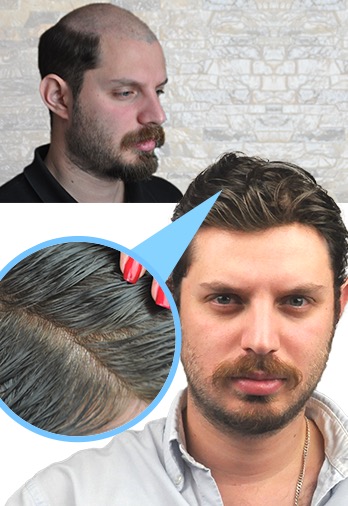


The Answer to a Failed Hair Transplant: A Hair System
Waiting months for a hair transplant, paying thousands, and still not getting the density you wanted is one of the most crushing disappointments there is. Looking in the mirror and still seeing thin patches, an asymmetric hairline or grafts that never took is draining not just aesthetically but psychologically. But when a hair transplant fails it is not the end of the road. One of the solutions modern technology offers, hair system, is one of the strongest rescues in that situation.
For people unhappy with their transplant results or left with inadequate density, a hair system is an effective alternative that needs no surgery, delivers an immediate visual improvement and restores confidence. What is more, it can be applied in harmony with the transplanted hair already there.
In this guide, why hair transplants fail, what the signs of failure are, how a hair system solves the problem and how it is applied are all answered in full detail. Start out with the right information and find hope again.
Why Do Hair Transplants Fail?
A failed hair transplant does not come from a single cause but from several factors coming together. Because it is a surgical procedure, the results are not always what you expect.
- An Inadequate Donor Area: If there are not enough healthy follicles at the nape, the density you want cannot be achieved.
- An Inexperienced Team: Teams who do not know the technique well can place the grafts incorrectly.
- The Wrong Technique: If a technique unsuited to the patient (FUE, DHI and so on) is chosen, the success rate drops.
- Too Few Grafts: If not enough grafts are taken for the density you want, a sparse look is inevitable.
- Healing Complications: Infection, tissue rejection or individual healing problems can affect the outcome.
- Genetic Factors: If the hair loss continues genetically, the transplanted hair can be lost too.
Between 30% and 40% of people whose hair transplant failed turn to a hair system. The reason is that it delivers a quick result and guaranteed density. Hair system you can find detailed information.
The Signs of a Failed Hair Transplant
If you are experiencing the following six to twelve months after the operation, your transplant may not have been as successful as expected:
- A Sparse Look: The expected density has not formed in the transplanted area and the hair is very thin.
- An Asymmetric Hairline: The front hairline reads as unnatural, crooked or artificial.
- Grafts That Did Not Take: A significant part of the transplanted hair fell out and never grew back.
- Patchy Gaps: There are visible gaps in different parts of the transplanted area.
- An Artificial Look: The hair sits in a direction different from its natural flow.
- Damage in the Donor Area: Visible thinning at the nape where the hair was taken from.
If you are experiencing one or more of these signs, you should get a professional hair analysis and weigh up your options.
A Hair System as the Answer After a Transplant
When your hair transplant does not turn out as you hoped, a hair system is the strongest answer: non-surgical, immediate, and compatible with the hair you already have. Here is what a hair system offers in that situation:
- An Immediate Result: You walk out on the day of the application with hair at exactly the density you want.
- No Surgical Risk: It needs no further operation, and there is no recovery time.
- Harmony With Your Existing Hair: It is integrated 100% with your transplanted and natural hair.
- No Waiting for a Second Transplant: You do not have to wait one or two years.
- Guaranteed Density: The density you want is delivered directly by the product.
- Reversible: You can remove it if you want; a hair transplant is permanent.
Many people who never reached the density they hoped for after a transplant have gone on with their lives confidently with a hair system. Hair system or hair transplant? Read our article to compare both methods in detail.
How a Hair System Is Applied After a Transplant
Applying a hair system after a transplant involves some details that differ from a standard application. The process consists of these steps:
- 1. Complete Healing: At least six to nine months must pass after the operation for full healing.
- 2. Hair Analysis: The state of the transplanted hair, the donor area and the remaining gaps are assessed.
- 3. Design Stage: A design is prepared that matches your existing hair 100% and integrates with the transplanted hair.
- 4. Production: The system is made from natural hair, to a mould taken specifically for you.
- 5. Application: It is integrated with millimetric precision by professional specialists.
- 6. Care Programme: A regular care schedule is set up.
The process takes seven to ten days on average; the application day itself takes only two to three hours.
A Second Transplant or a Hair System: Which Makes More Sense?
When a hair transplant fails there are two options: have a second one, or move to a hair system. The table below lets you weigh the two side by side:
| Criterion | A Second Transplant | Hair System |
|---|---|---|
| Time to Result | 6–12 months | Immediate |
| Surgical Risk | Yes (increased risk) | None |
| Cost | 25,000–90,000 TL | 10,000–40,000 TL |
| Donor Area | May be inadequate | Not needed |
| Guaranteed Result | None | 100% guaranteed density |
| A Second Chance | Limited (genetic factors) | Unlimited (reversible) |
In a second transplant the donor area can run out, and there is a risk the transplanted hair fails to take again. A hair system, by contrast, can always be renewed and adjusted, and it guarantees density.
How Is Harmony With Transplanted Hair Achieved?
The most critical part of applying a hair system after a transplant is achieving natural harmony with the transplanted hair already there. That harmony comes from these details:
- Colour Matching: A special colour match is made using the transplanted hair as the reference.
- Texture Matching: The thickness and texture of the strands are set to be the same as your existing hair.
- Hair Direction Matching: The direction of the system’s hair is prepared to match that of the transplanted hair.
- A Gradual Density Transition: The transition between your existing hair and the system is made gradual and natural.
- Hairline Correction: An asymmetric or artificial-looking hairline is redesigned.
All these details are determined in the professional hair analysis and carried into the design of the system. Choosing among hair system models you can choose the one that suits you best.
Psychological Recovery: Getting Your Life Back
The great majority of people whose hair transplant failed experience a serious psychological impact. Having waited months, invested financially and stayed away from social life shakes confidence deeply. At that point a hair system is not just cosmetic; it is a psychological rescue.
- Immediate Confidence: You return to your life looking exactly right on the day of the application.
- Social Life Comes Back Fast: You stop withdrawing into yourself.
- Performance at Work: Worrying about how you look gives way to focus.
- Ease in Relationships: Confidence rises in close relationships.
- A Positive Outlook: You start looking at life more hopefully.
To look at the psychological effects of hair loss in more detail, see the psychological effects of hair loss article.
Hair Systems After a Transplant, for Men and for Women
The reasons a transplant fails, and the details of applying a hair system, differ by gender.
- In men: An inadequate donor area is common in those at an advanced stage on the Norwood scale. Hair systems for men give ideal results for the crown and front area.
- In women: Because of the diffuse thinning pattern, failed transplants are more common. Hair systems for womenmake up completely for the density left missing after a transplant.
For both, excellent results are achievable with a professional analysis, the right system and expert application.
What to Think About Before Deciding After a Transplant
Before having a second hair transplant, ask yourself these questions:
- Do you have enough healthy follicles left in your donor area?
- Are you willing to wait another year for an uncertain result?
- Can you afford the same operation again financially?
- Do you want to take on the surgical risk (infection, anaesthesia and so on) again?
- Are you ready to step back from your social life for another six to twelve months?
- Could the transplant’s success drop again because of genetic factors?
If you answered “no” or “not sure” to most of these questions, a hair system may be the better choice for you.
Hair Transplants Abroad Gone Wrong: Coming Back to Türkiye
In recent years Türkiye has led the world in hair transplant tourism. But in the search for cheap packages some people choose low-quality centres and end up disappointed. For those returning from abroad, or for local clients, here is what a hair system solves after a transplant:
- The Low-Density Problem: Transplants promising 5,000+ grafts that deliver 2,000–3,000, and do not take.
- The Wrong Hairline: Designs unsuited to the person’s age and face.
- Donor Area Damage: Thinning at the nape after too many grafts were taken.
- Continued Shock Loss: Hair that never grew back six months on.
- Infection Problems: Complications after an operation performed in unhygienic conditions.
- Neglected Warranty: Following up problems is hard once you are home from abroad.
When these things happen, a hair system is the fastest, safest and most effective answer.
The 1-Year Wait After a Transplant: Why It Matters
You need to wait a certain time after a hair transplant before applying a hair system. There are biological and aesthetic reasons for that wait:
- Healing (1–3 months): The scalp must heal fully, and the scabbing and redness must pass.
- Shock Loss (1–4 months): Temporary shedding after the operation is normal.
- Regrowth (4–8 months): The grafts root and grow.
- Assessing Density (8–12 months): The result starts to take its final shape.
- Deciding (12+ months): A hair system is chosen according to how satisfied you are.
If you are still not happy after twelve months, a hair system may be the right choice. For details see hair system page.
Crown Thinning After a Transplant: The Hair System Answer
The area where a hair transplant most often fails is the crown. Partial hair system applications give excellent results there:
- Top Piece Application: A bespoke system covering the crown only.
- Integration With Existing Hair: A natural join with the transplanted hair at the sides.
- A Fast Answer: The transformation happens the same day.
- An Economical Price: In the 8,000–15,000 TL range.
- Natural look: Excellent results with a lace-based application.
- Reversible: It can be removed later.
Take a look at NeoHair’s dedicated applications for crown thinning.
Hair Transplant vs Hair System: A 2026 Cost Comparison
The cost difference between having a second transplant when the first failed and choosing a hair system:
| Item | A Second Transplant | Hair System |
|---|---|---|
| Initial Cost | 35,000–90,000 TL | 10,000–40,000 TL |
| Time Required | 12+ months | Immediate |
| Success Guarantee | None (donor problem) | 100% guaranteed |
| Time Off Work | 2–3 weeks | 1 day |
| Result Guarantee | Low | High |
The table shows that a hair system is both economical and guaranteed. For a detailed comparison see hair system or hair transplant? .
Men’s Stories: Hair Systems After a Failed Transplant
The stories of people who went through a failed transplant and got their lives back with a hair system are inspiring:
- “The transplant I had in Istanbul promised 3,500 grafts; only 1,500 took. With a hair system my confidence came back the same day.” — Burak T., 38
- “I had a cheap transplant abroad. My donor area thinned badly. With a hair system I no longer think about transplants or going abroad.” — Cem A., 42
- “I had three transplants and none of them gave me the density I wanted. With a hair system I went back to being 30.” — Murat B., 45
For both men and women , a hair system after a failed transplant is the ideal answer.
Failed Transplants in Women, and Hair Systems
For female clients a hair transplant is a less successful choice. Because of the diffuse thinning pattern, male-pattern transplant techniques fall short in women:
- The Diffuse Thinning Problem: Female-pattern loss is diffuse, not localised.
- The Hormonal Factor: In hormonal hair loss a transplant is not sustainable.
- Donor Area Limits: In women the donor area can be inadequate.
- The Hair System Advantage: It covers the whole area of loss in one go.
- The Aesthetic Result: A hair system meets a woman’s need for volume better.
- A Fast Answer: The result comes without any waiting period.
For female clients, hair systems are the right answer to female-pattern hair loss.
NeoHair: A Door of Hope After a Failed Transplant
NeoHairis a centre with dedicated experience and expertise in helping people whose hair transplant went wrong. Our portfolio of clients who moved on with a hair system after hundreds of failed transplants is the real proof of that experience.
Frequently Asked Questions
Related Posts
How Long Does a Nanotechnology Hair System Last?
The service life of nanotechnology hair systems varies according to the material used in making them, correct wear and the care carried out. The technology used in making…
Read More
Hair System Models
Having natural-looking hair again after hair loss is possible with hair system models . How? What matters for this is that the hair is always styled naturally. At…
Read More
The Stages of Making a Hair System
Hair transplant Hair systems, chosen more often than that method and used more and more, bring the question “What is this hair system method?” to mind. First of…
Read More