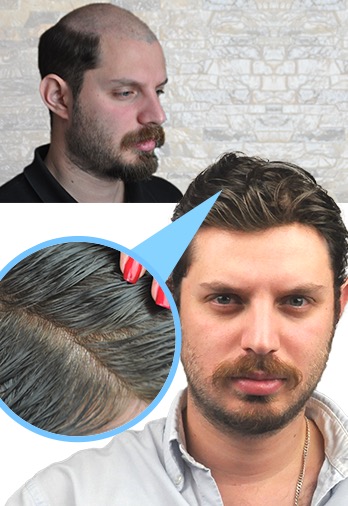


How Can You Tell Whether Hair Is Natural or Synthetic?
One of the most important decisions you face when choosing a hair system: natural human hair or synthetic? These two options look similar at first glance, but they are completely different in terms of the wearing experience, naturalness, lifespan and price. The right choice matters greatly, both for your wallet and for how happy you will be later.
Natural hair systems are made from real human hair and match your existing hair 100%. Synthetic hair is made from modern fibres and offers a budget-friendly alternative, but it can fall short on naturalness and durability. Knowing which option suits your lifestyle, your expectations and your budget is vital.
In this guide, every difference between natural hair and synthetic hair systems is examined in detail in terms of appearance, feel, lifespan, care, price and everyday comfort. You will be able to see clearly which one suits you better.
Natural Human Hair Systems: Premium Quality and Naturalness
Natural hair systems are made from real human hair of European, Russian, Indian or Brazilian origin. Every strand is graded, sterilised and worked into the base with millimetric precision during production. Its match with your existing hair, its movement, its shine and its texture are exactly like natural hair.
- Natural look: 100% natural look, feel and movement
- Styling: Can be styled with curling tongs and straighteners
- Dyeing: The colour can be changed with standard hair dyes
- Lifespan: 12–24 months with proper care
- Price: Mid-to-upper segment
- Weather: Behaves naturally in wind, rain and humidity
Natural hair systems are the gold standard of professional hair system applications. Combined with modern technology they become one with your existing hair.
Synthetic Hair Systems: The Economical Alternative
Synthetic hair systems are made from artificial fibres such as modacrylic, polyester or nylon. The better ones, developed with modern technology, can look quite close to natural hair. But they lag behind natural hair on heat resistance, shine and how they feel to the touch.
- Natural look: Mid-level; noticeable close up
- Styling: Not heat-resistant; damaged even by low heat
- Dyeing: Cannot be dyed; the colour is set at the factory
- Lifespan: 3–6 months
- Price: Lower segment, economical
- Weather: Shows an artificial shine in humidity and heat
A synthetic hair system can be a starting option for very short-term wear or for people on a very limited budget. But for long-term satisfaction natural hair should be chosen.
Natural vs Synthetic Hair Systems: A Detailed Comparison
Seeing every aspect of the two options side by side is the soundest way to make the right choice:
| Criterion | Natural Hair | Synthetic Hair |
|---|---|---|
| A natural look | Excellent | Medium |
| Shine | Naturally matte-to-glossy | An artificial shine |
| Feel | Soft, silky | Plastic-like |
| Heat Styling | Possible | Not possible |
| Can Be Dyed | Yes | No |
| Lifespan | 12–24 months | 3–6 months |
| Price Range | 15,000–40,000 TL | 3,000–10,000 TL |
| Care Sensitivity | Professional care | Limited care |
| UV Resistance | Good | Low (the colour fades) |
| Sport / Swimming | Suitable | Limited suitability |
The table shows that natural hair is superior in almost every respect. But synthetic hair can still make sense in certain scenarios. A professional hair analysis is essential for the right choice. To see all the models, hair system models page.
Types of Natural Hair: European, Russian and Indian Compared
“Natural hair” is not really a single category; there are many options with different properties depending on origin.
- European Hair: The most premium option. Fine strands, a soft texture and natural shine. In the highest price band.
- Russian Hair: Very close in quality to European hair. Extremely durable thanks to its cold-climate resilience.
- Indian Hair: Mid-to-high quality. Thick strands, a natural wave pattern. Among the closest to European wearers’ hair structure.
- Brazilian Hair: Dense and voluminous. Has a natural wave and curl.
- Chinese Hair: Thick and straight. Can be budget-friendly but is rarely chosen in professional applications because of the difference in texture.
Which type of hair is closest to your own? That question is answered in the hair analysis, and the right product is then recommended.
When Natural Hair, When Synthetic?
Both options make sense in different scenarios. It matters to choose the right one for your needs:
- Choose Natural Hair If: you are planning long-term wear; a natural look comes first; you want to style and dye your hair; you have an active daily life; or you are in a professional working environment.
- Synthetic Hair Can Be Considered If: you need it short-term (for a party or an event, say); your budget is very limited; or you plan to wear it in a fixed colour and style.
For both hair systems for men and hair systems for women In applications, choosing natural hair generally gives the better result.
The Care Advantages of a Natural Hair System
Because a natural hair system behaves like your own hair, caring for it is familiar and easy:
- Regular Washing: Washed every three to seven days with special shampoos.
- Care Masks: Moisture balance is maintained with quality hair masks.
- Professional Restoration: A professional revitalising treatment once or twice a year.
- Haircuts: Standard cutting methods can be used.
- Re-Dyeing: A shift of a few shades is possible.
Care being more flexible than with synthetic hair comes from a natural hair system being a “living” product.
The Limits and Risks of Synthetic Hair
The economical face of synthetic hair may be tempting, but there are limits you will run into while wearing it:
- Heat Sensitivity: High-heat straighteners, tongs and hairdryers cannot be used.
- Fixed Shape: You have to keep the shape it came with from the factory.
- Fixed Colour: It cannot be dyed; a colour change means a new product.
- UV Damage: Long spells in the sun can fade the colour.
- An Artificial Shine: In some lighting it takes on a plastic-like shine.
- A Short Life: Visible wear after three to six months.
Being aware of these limits matters if you are not to be disappointed. For better wear, natural hair should be chosen. For details see the best hair systems .
Blended Models: Natural + Synthetic
Some hair system models use natural and synthetic hair together. That approach offers a reasonable middle ground in terms of value for money.
- Advantages: A price advantage, a medium-to-long product life, an improvement in visual quality.
- Disadvantages: Two different materials mean care needs attention, and the hybrid lifespan can be uneven.
- Recommended For: Those looking for a balance between budget and quality, and first-time hair system wearers.
Blended models do not offer all the advantages of natural hair, but they can be a good starting point.
Which Is the More Sensible Investment?
At first glance synthetic looks cheaper, but assessed over a two-year total cost natural hair is a far more sensible investment.
| Item | Synthetic (2 years) | Natural (2 years) |
|---|---|---|
| Cost per Unit | 5,000 TL | 22,000 TL |
| Replacement Frequency | 5–6 times | 1–2 times |
| Total Cost | ~ 25,000–30,000 TL | ~ 25,000–44,000 TL |
| Satisfaction Level | Low to medium | Very high |
As you can see, the cost difference is far smaller than you would think — but the difference in satisfaction is a chasm.
What Is Remy Hair? The Premium Natural Hair Category
Remy hair is the highest quality category of natural human hair. The cuticles of the strands (the layer on the surface of the hair) must all run in the same direction and the hair must be entirely unprocessed.
- Cuticle Alignment: All strands facing the same way preserves the natural texture.
- Natural Movement: Unprocessed hair moves like your own hair.
- Long life: Twice as long-lasting as standard processed hair.
- A Premium Price: High quality comes at a cost.
- Dyeing Tolerance: It stands up to repeated dyeing.
- Environmental Resistance: Stronger against UV, chlorine and salt.
Although a hair system with Remy hair costs more, it is the right investment for long-term satisfaction. Among all hair system models you can look at the Remy options.
Heat-Friendly Synthetic Hair: The New Generation
Heat-friendly synthetic hair, developed with modern technology, is different from traditional synthetics. These new-generation products allow styling at low heat:
- Maximum 150°C: Can be styled at low heat.
- Natural look: More natural than traditional synthetics.
- Mid Price: Cheaper than fully natural hair.
- Care Limits: Care still needs attention.
- Fixed Colour: It still cannot be dyed.
- Blend Options: A 30–50% blend with natural hair is common.
It can be a reasonable middle ground for wearers looking for a balance between budget and naturalness.
What Colours Does Natural Hair Come In?
Natural hair systems come in a wide range of colours. Thanks to their dyeability, special colours can also be made:
- Natural Black (1): The most common natural colour.
- Dark Brown (2): Very well suited to Turkish hair.
- Medium Brown (4): The standard European colour.
- Light Brown (6): Caramel tones.
- Dark Blonde (8): Natural blonde shades.
- Light Blonde (12): Premium blonde tones.
- Platinum Blonde (60): The lightest blonde category.
- Grey Blends: 20%, 50% and 80% grey ratios.
- Highlights and Balayage: Multi-colour effects.
The colour match is determined in a professional hair analysis.
Natural Hair System Prices 2026
Prices for hair systems using natural human hair vary by origin:
- Chinese/Vietnamese Hair (Economical): 12,000–18,000 TL
- Brazilian Hair: 16,000–24,000 TL
- Indian Hair (Standard): 18,000–28,000 TL
- Indian Remy Hair: 22,000–32,000 TL
- Russian Hair: 28,000–38,000 TL
- European Hair: 32,000–45,000 TL
- European Premium Remy: 40,000–55,000 TL
For both men and women For wearers, choosing natural hair is the soundest investment.
Common Problems With Synthetic Hair
Problems synthetic hair wearers commonly complain about:
- An Artificial Shine: A marked artificial shine in sunlight or artificial light.
- A Tendency to Tangle: The strands tangle together with friction.
- Colour Fading: Colour loss from long exposure to UV light.
- Static Electricity: Static builds up frequently in synthetic strands.
- Heat Damage: Hot water, hairdryers and tongs cannot be used.
- Loss of Shape: It cannot hold its original shape over time.
- A Plastic Texture: It feels like plastic to the touch.
These problems are limits that have to be accepted when choosing synthetic.
NeoHair’s Choice of Natural Hair
NeoHairuses mainly natural hair of European and Russian origin in order to give its clients the best result. That choice means both naturalness and a long life.
Frequently Asked Questions
Related Posts

In Which Cases Is a Hair System Applied
Hair loss has been one of men’s main problems from the past to the present. Although it is seen in men, it is seen just as often in…
Read More
The Stages of Making a Hair System
Hair transplant Hair systems, chosen more often than that method and used more and more, bring the question “What is this hair system method?” to mind. First of…
Read More
How Long Does a Nanotechnology Hair System Last?
The service life of nanotechnology hair systems varies according to the material used in making them, correct wear and the care carried out. The technology used in making…
Read More